Capitula
The Capitula platform contains five modules to cover every aspect of your tissue model design process. Design your construct, optimize its manufacturing, and ultimately simulate and predict its behavior.
Design
Turn a tissue idea into toolpaths.
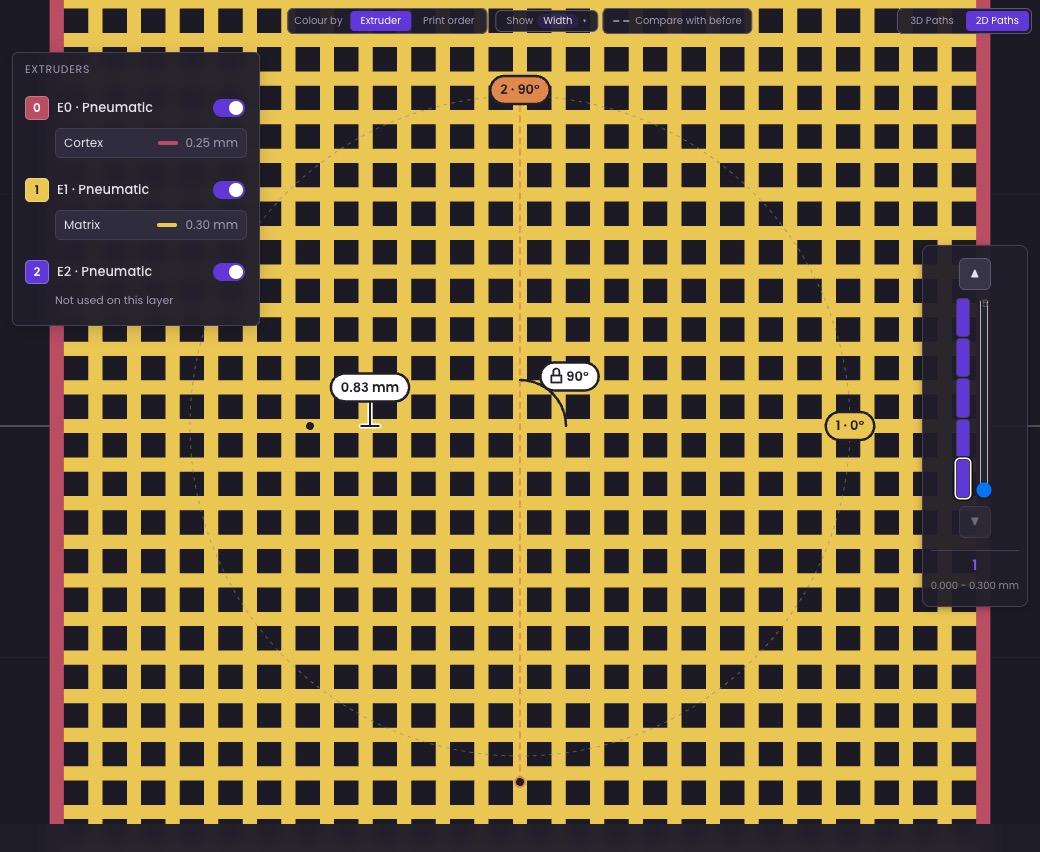
BioSlicer is hardware agnostic and builds the construct from a description or a drawing: lattices, gyroids, channel networks, droplets and multiple materials, for extrusion or light. Each path can be edited down to a single segment.
More about BioSlicer →Optimize
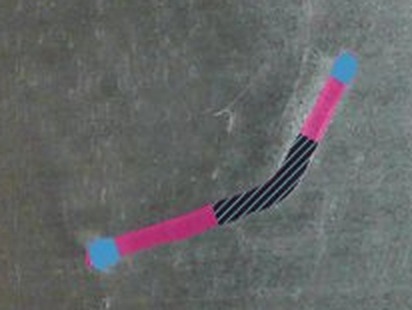
Analyze and optimize your design from the ink to the scaffold.
Simulate
Know what will happen before you print.
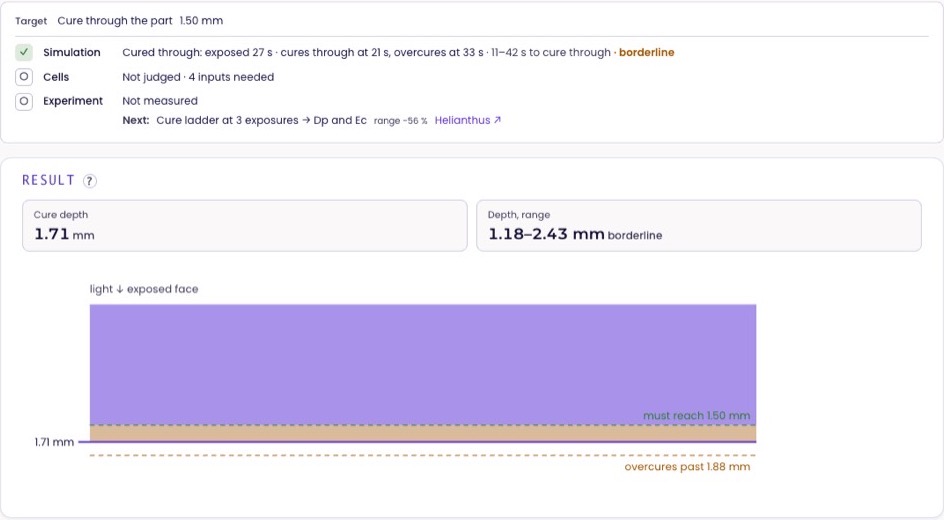
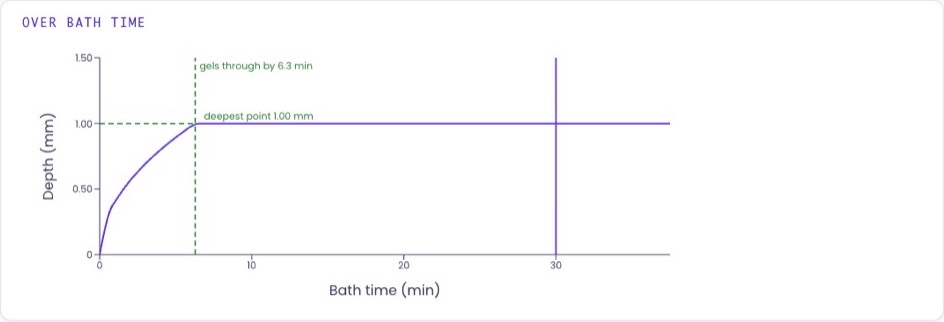
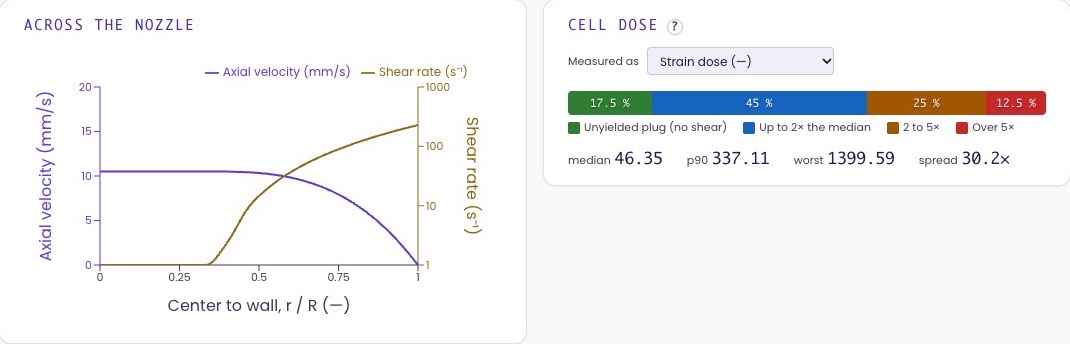
Solidago predicts the pressure that lays the line and the shear each cell takes on the way out of the nozzle. Then it predicts how the part sets: the light exposure that cures it through without overcuring, or the bath time an alginate part needs to gel to its centre. It also checks that the struts of a lattice hold their shape.
Light cure and ionic crosslinking
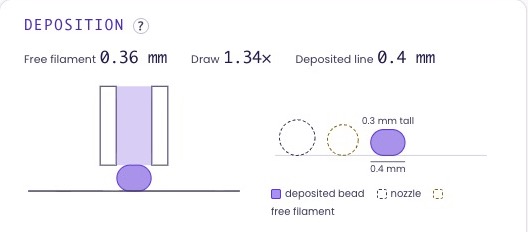
Predict deposition and nozzle dynamics
For a target line Solidago predicts the pressure and flow rate that lay it, how the ink moves through the nozzle and the filament that comes out.
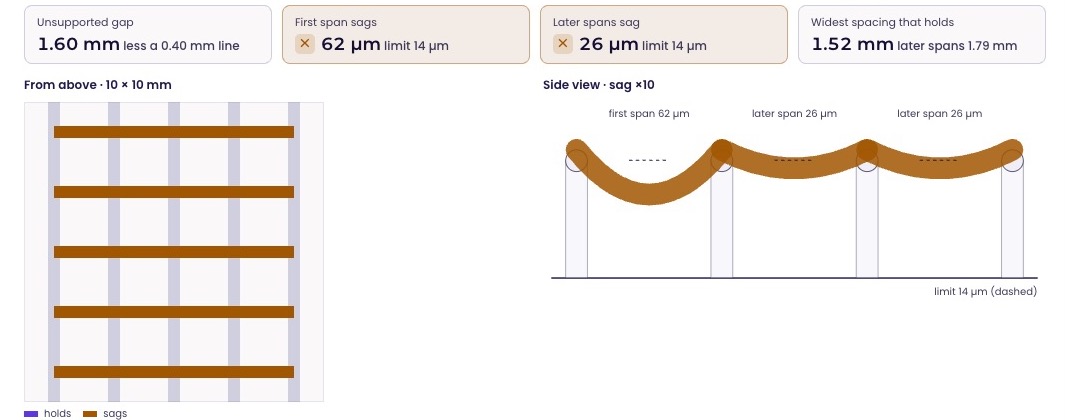
Check that the struts hold
Solidago predicts how far each strut of a lattice sags across its gap before the ink sets, and the widest spacing that stays within limits.
Underneath all three
Experiments run for you
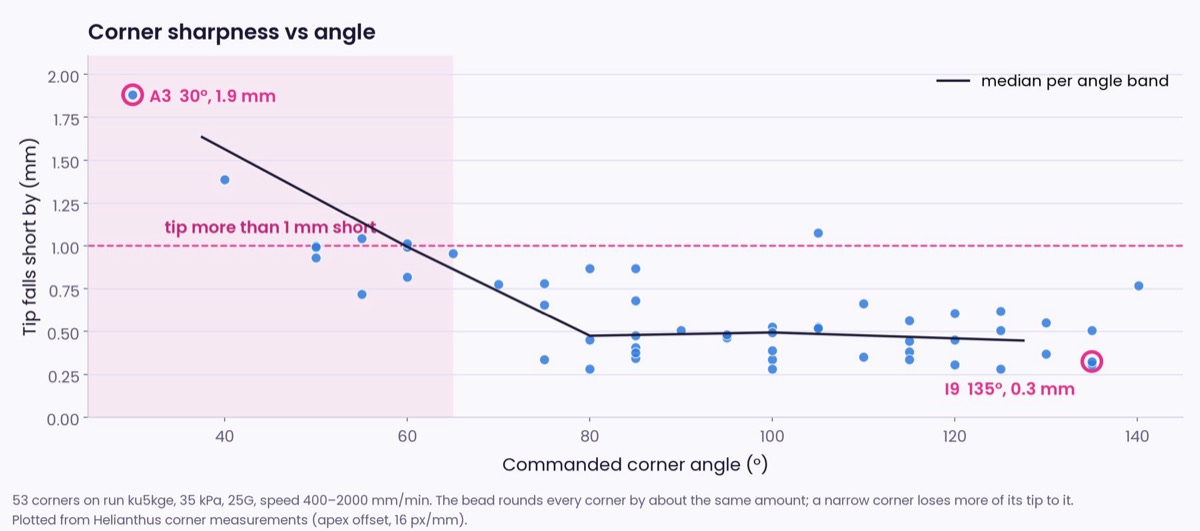
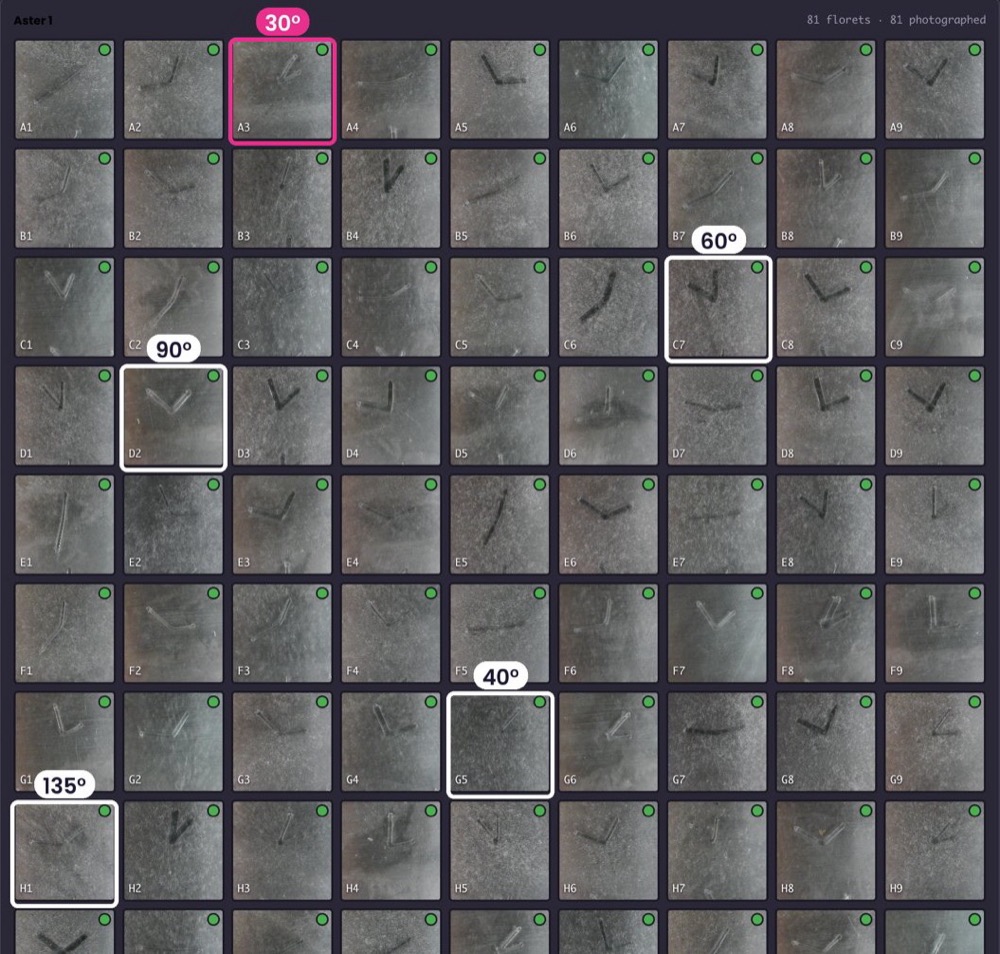
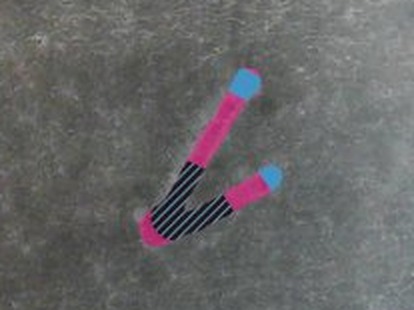
Cosmos plans the experiment, lays out the plate and matches every photo to the print that made it, so design, optimization and simulation all work from real prints.
Every batch on the record
Calendula keeps one structured record per batch with every lot, cell, toolpath, setting and measurement. Results can be compared across operators, labs and sites.
Ask your records
Bombus answers plain-language questions across every module, such as "Which ink lots printed within tolerance last month, and on which printer?"